
News article 1
For years, video games have been viewed with fascination and prejudice. Many associate them with leisure or teenage activity, but what happens when we look at them from another perspective? In this investigation, I decided to go beyond the joystick and talk to two adults—Cameron, from Minnesota, and José, originally from Venezuela—to discover how video games entertain and develop valuable skills in adult life.
Cameron fondly remembers playing the Super Nintendo from age four, especially with his family. "It was a bonding moment," he says. Although his playing style has changed over time, today, he prefers games like Zelda and Overcooked, which, he says, have helped him develop problem-solving skills, spatial reasoning, and effective communication. "Playing with a partner teaches you coordination, patience, and laughter in the process," he comments.
For his part, José started playing an Atari at age seven and later fell in love with open-world games. Although both are now professionally dedicated to data science, Jose acknowledges that his understanding of English has improved significantly thanks to video games and his critical thinking and historical knowledge. "I learned more about mythology playing Age of Empires than I did in many classes," he confesses.
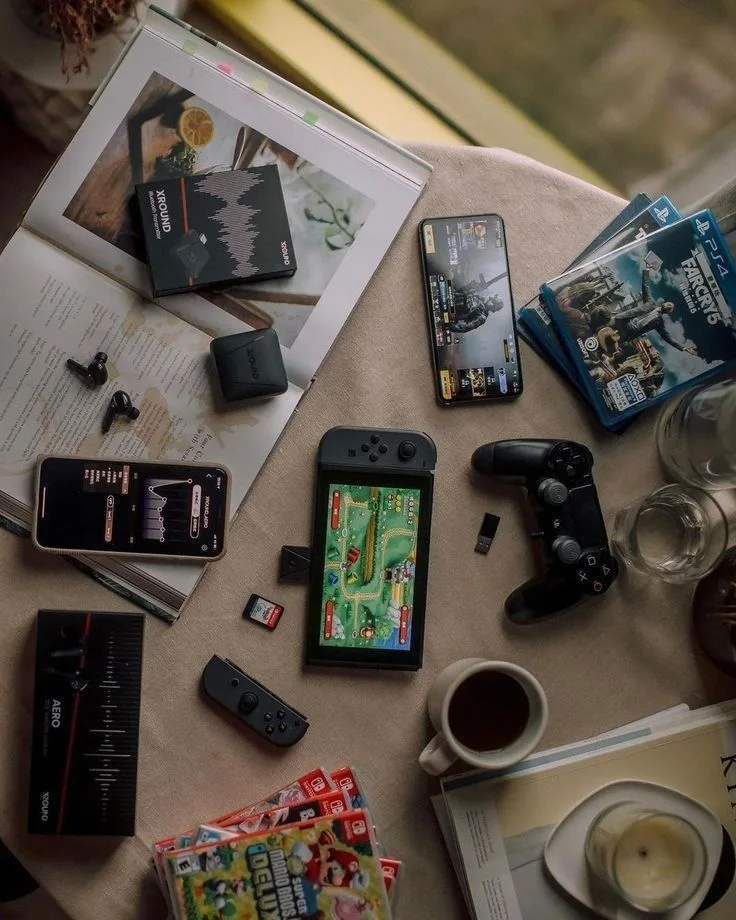
They both agree that a social stigma pigeonholes gamers as isolated or unsociable. However, as José points out, "video games are a valid form of entertainment and even a cultural tool, just like a movie or a book."
This approach is not isolated. An article published in Frontiers in Education (2023) highlights that video games promote the development of executive functions such as working memory, planning, and cognitive flexibility. These skills are essential in educational contexts, the workplace, and everyday problem-solving (García-Cueto et al., 2023)
Likewise, a study from the Research Journal in Advanced Humanities (Khasawneh, 2024) supports these experiences from an educational perspective, stating that video games also enhance reading comprehension, intrinsic motivation, and the development of metacognitive skills, especially when integrated with learning objectives. Role-playing, adventure, and strategy games promote logical thinking and encourage conscious decision-making, even in multilingual environments. Cameron interviewed.
So, are video games a waste of time? According to my interviews and the studies analyzed, the answer is a resounding no. Instead, they are a versatile platform that, when used well, can be a powerful tool for personal and professional development. Far from being a simple distraction, video games become a mental gym where fun and learning coexist on the same screen.